Manuscripts, patents, reports. Figures, tables, equations — the evidence isn't only in the prose.
Read the text — and see the figures.
Visual
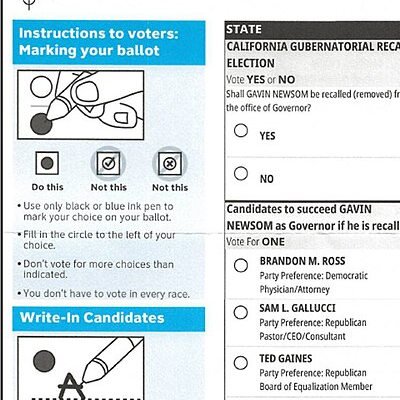
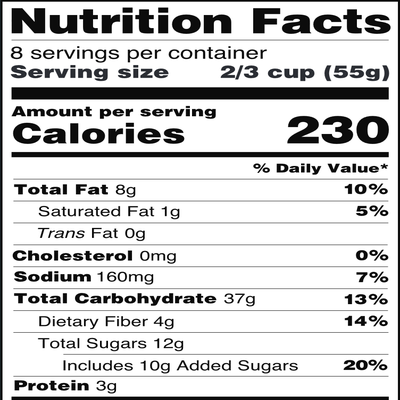
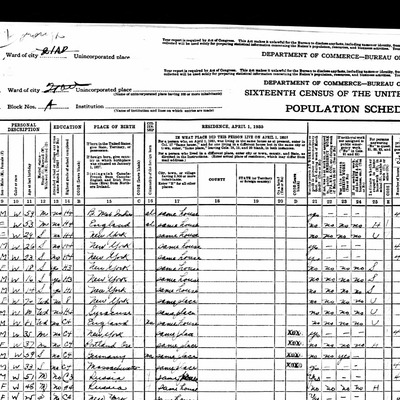
Forms, invoices, typed letters, well-scanned pages. The layout carries meaning.
Look before you read.
Squint
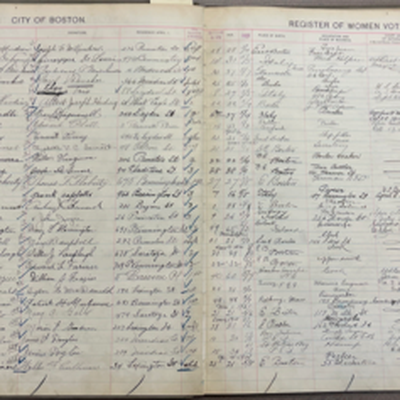
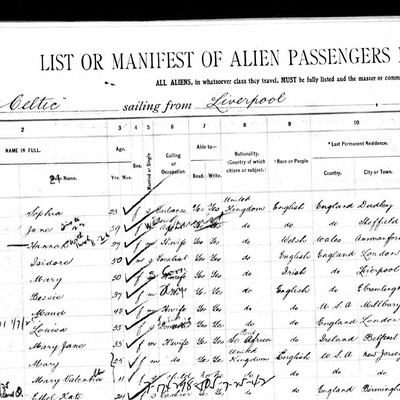
Ledgers, registries, field notes. The same structure on every page — clean or damaged.
Read each page the same way.
On Data Mint, we add more reader modes as we find document types that need them.
Four disciplines of reading. One extraction, on Data Mint. No matter where you interface with AI: pick the reader that fits the document.
@karlrohe
The four types specify the instrumentation in the mint. That is how Data Mint processes your documents before your codebook ever sees them. Your codebook does not change when you switch. The instrument in front of it does.
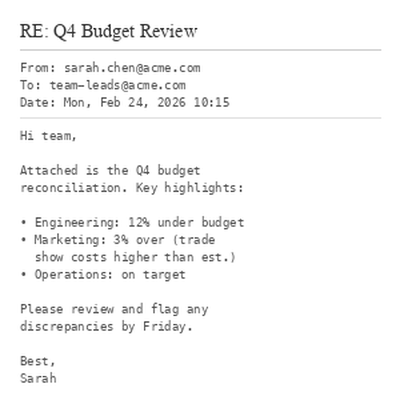
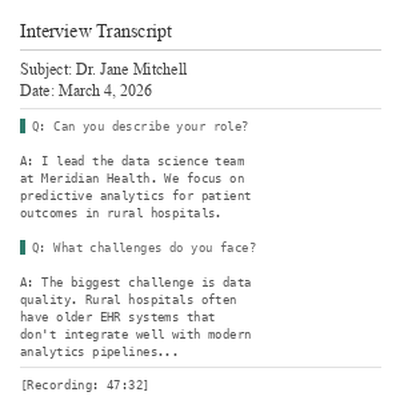
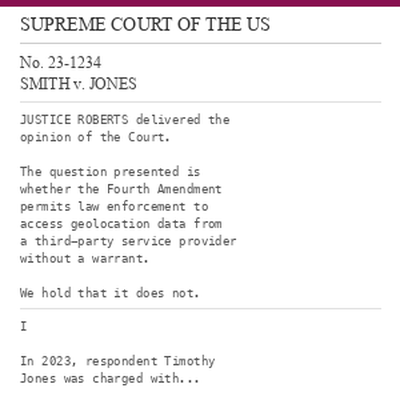
Text is the case you are already picturing. Emails, articles, transcripts, clean PDFs. Your codebook is plain text. The document is plain text. You are off and running.
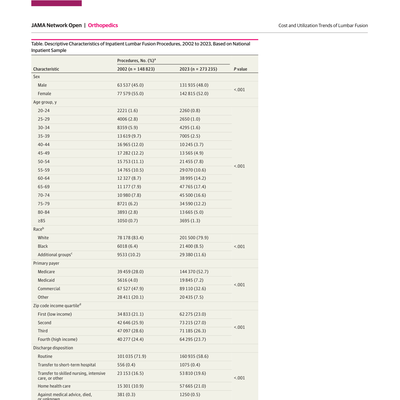
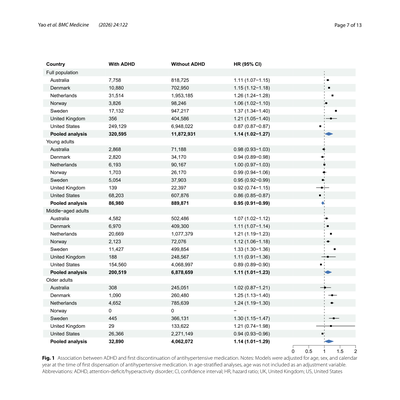
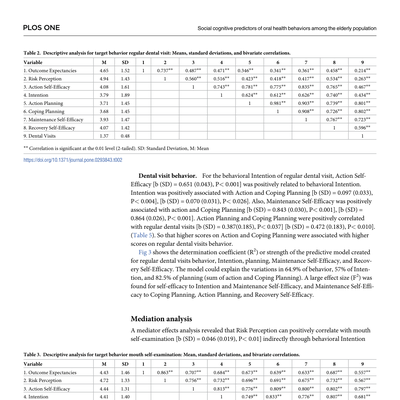
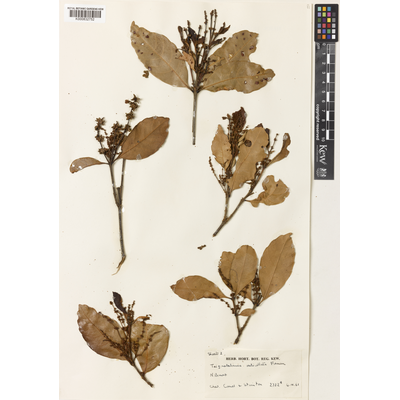
Scientific manuscripts keep much of their evidence outside the prose. Figures, tables, equations. Patents and technical reports do the same thing. When the PDF is converted to plain text, that information is where the loss happens.
Some tables take a person two or three minutes just to understand. You have probably had the experience. They are hierarchically structured. They are laid out like no table you have seen before. They are just messy.
So before minting a scientific document, Data Mint blooms it. The name comes from metallurgy. When you are minting coins, you mix and prepare the metal before you strike it. That preparation is blooming. It has nothing to do with the shape of the coin.
definition
Bloom — a pass over a scientific document, before minting, that renders its tables, figures, and equations into plain text. It runs on the document, never on your codebook.
AI readers are much better at reading text than at looking at things. A figure is compact. Five pages of text describing it are not, and the reader does not mind. Whether we are actually different here does not matter. The advantage is that you can hand an AI reader a great deal of text and it will very happily digest it.
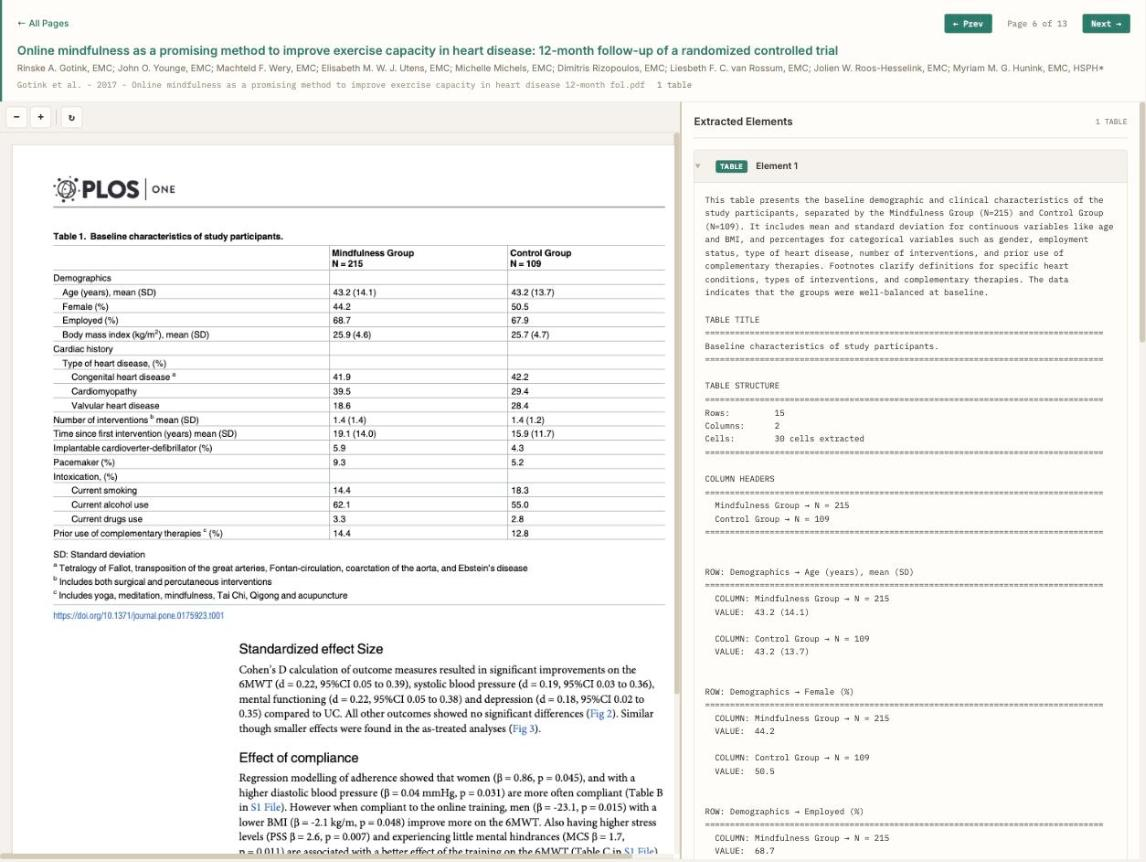
You can read the bloomed text yourself. Click a document, click a page, and see exactly how a table or a figure was represented in text. That is the text the reader gets. Nothing else reaches it.
The bloom view, page 6 of a trial report. On the left, the page as printed. On the right, the same table as plain text: a prose summary first, then the title, the row and column counts, the column headers, then every cell as a row-column-value line. The right-hand panel is what the reader receives.
Visual mint sends the images instead of the text. Everything else works like text mint. The images have to be looked at, so it runs on multimodal models only.
Squint is for historical ledgers, and I do not give it to everybody. The print is tiny and the pages are often damaged. Is that a three or an eight? The reader has to zoom in to tell, and there is a process under the hood that does it. It is harder to use, and people get lost. If you have a pile of ledgers, write to me. Fifteen minutes is usually enough to get you going.